
Finding the Right Light for Anthurium | Rooted with Maddie
What I learned about lighting and foot candles for anthurium. How I adjusted my setup to prevent chlorosis and keep healthy growth.
PLANT CARE
Finding the Right Light: What I Learned About Foot Candles and Anthurium
When I first started collecting anthurium, I built my own cabinet setup using Ikea Rudsta wides. I added Barrina full spectrum T5 lights, two per shelf, and even placed a few down the sides so every seedling got enough light. It worked perfectly at first.
My plants were small then, just a few leaves each, and they seemed to love it. But as they grew, things started to change.
When Too Much Light Becomes a Problem
It started with the leaves. Some of them developed a strange alligator-like pattern across the surface. The color looked off too, shifting to a bright yellow-green, and the veins stood out more than usual.
At first, I thought it was an issue with what I was using for fertilizer, but after a little digging and talking to other growers, I learned it was chlorosis. Simply put, they were getting too much light.
That’s when I realized lighting wasn’t something you just set up once and forget. You have to adjust it as your plants grow and as the space changes.
Learning to Read the Light
Not all anthurium like the same conditions. Those with waxy leaves can handle and even prefer brighter light, while the darker, velvety varieties do better with less. It helps to think about where they grow naturally. The glossy types usually live higher up in the canopy, while the velvety ones stay in shadier, lower spots.
Once I understood that, I started moving plants around. The taller ones or those with thicker leaves went closer to the lights. The velvety varieties moved lower, where the light is softer. I turned off one of the two lights on each shelf to tone things down.
Measuring Light the Right Way
After that, I bought a light meter so I could stop guessing. It measures light in foot candles, which tells you how much usable light the plant is actually getting.
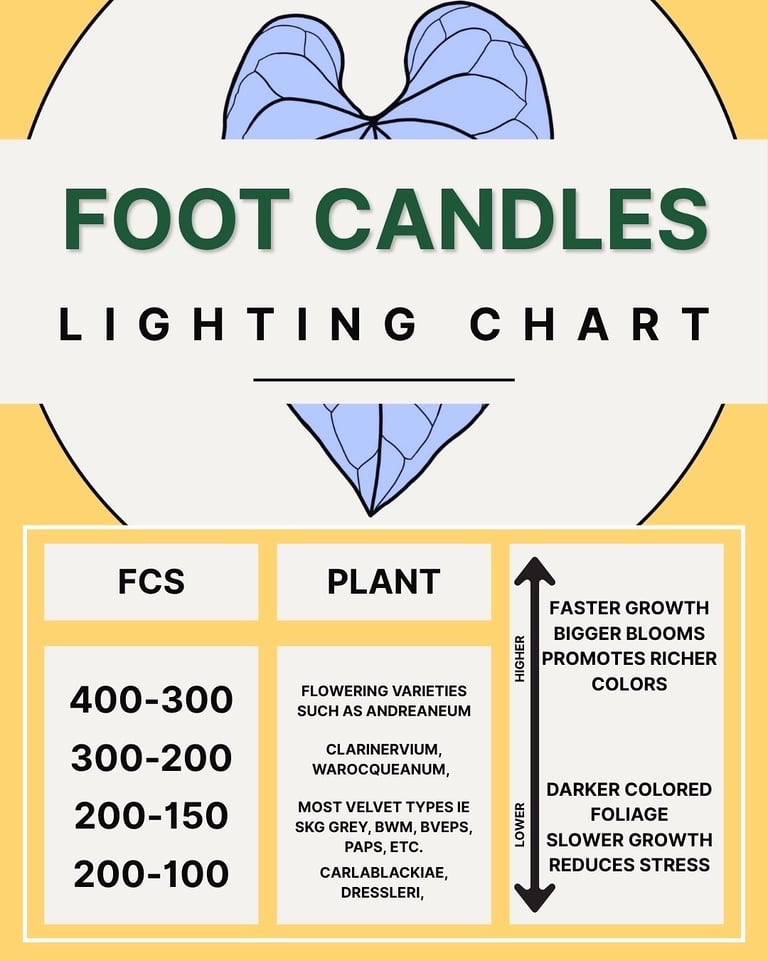
As a general rule, I’ve learned to keep my anthurium between 100 and 400 foot candles depending on the type. The velvety ones stay toward the lower end, while the waxy ones handle more.
I keep the plants about eight inches from the lights, but that can change based on their size. Smaller seedlings sometimes sit a little closer, while larger ones are set farther back. I also have a few that grow in ambient light outside of the cabinet, about twelve inches from their light source.
For anyone just starting out, a light meter is worth it. It takes away the guesswork and helps you understand how your setup is actually performing.
Adjusting Without Overcomplicating It
I still use two lights per shelf, but only one stays on most of the time. I’ve heard of growers softening the light even more by brushing a layer of white glue over the bulbs, which dries with a slight haze. I haven’t tried it yet, but it’s a creative way to diffuse the light if you need to cut it down further.
I keep an eye on the plants and make small changes instead of big ones. If a leaf starts to lighten or curl, I raise the light, turn one off, or move the plant to a darker corner. I adjust as needed. Sometimes it’s that simple.
Learning From Other Growers
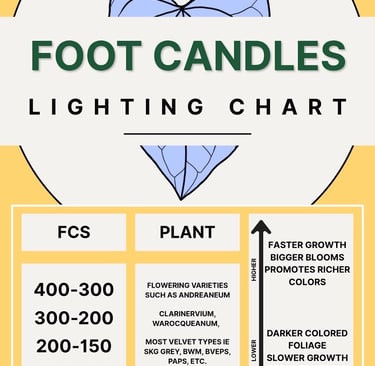
A lot of what I’ve learned about lighting came from trial and error, but also from listening to others in the plant community. I remember watching a live from Periwinkle Plants where they shared a chart they made showing ideal light ranges for different anthurium. It helped connect everything I was seeing in my own setup.
If you haven’t already, give them a follow on Instagram or visit periwinkleplants.com. They shares great information on lighting and plant care.
What I’ve Learned Overall
Lighting isn’t about finding one perfect setup. It’s about balance, and that balance changes as your plants grow.
When I started, I thought more light meant better growth. Now I know that too much light can cause just as many problems as too little.
Learning to read the signs, measure what’s really happening, and adjust as you go makes all the difference.
Contact
Get in touch for plant care advice.
Follow
© 2026 Grown with love in Lexington, South Carolina